A Guide from Dr. Starsiak · Evidence-Tiered
Decreasing body pain
from every angle
Herbs, light, mechanical tools, oil, heat, and movement — what each one is actually worth for joint and muscle pain, how to use it, and the cautions that matter.
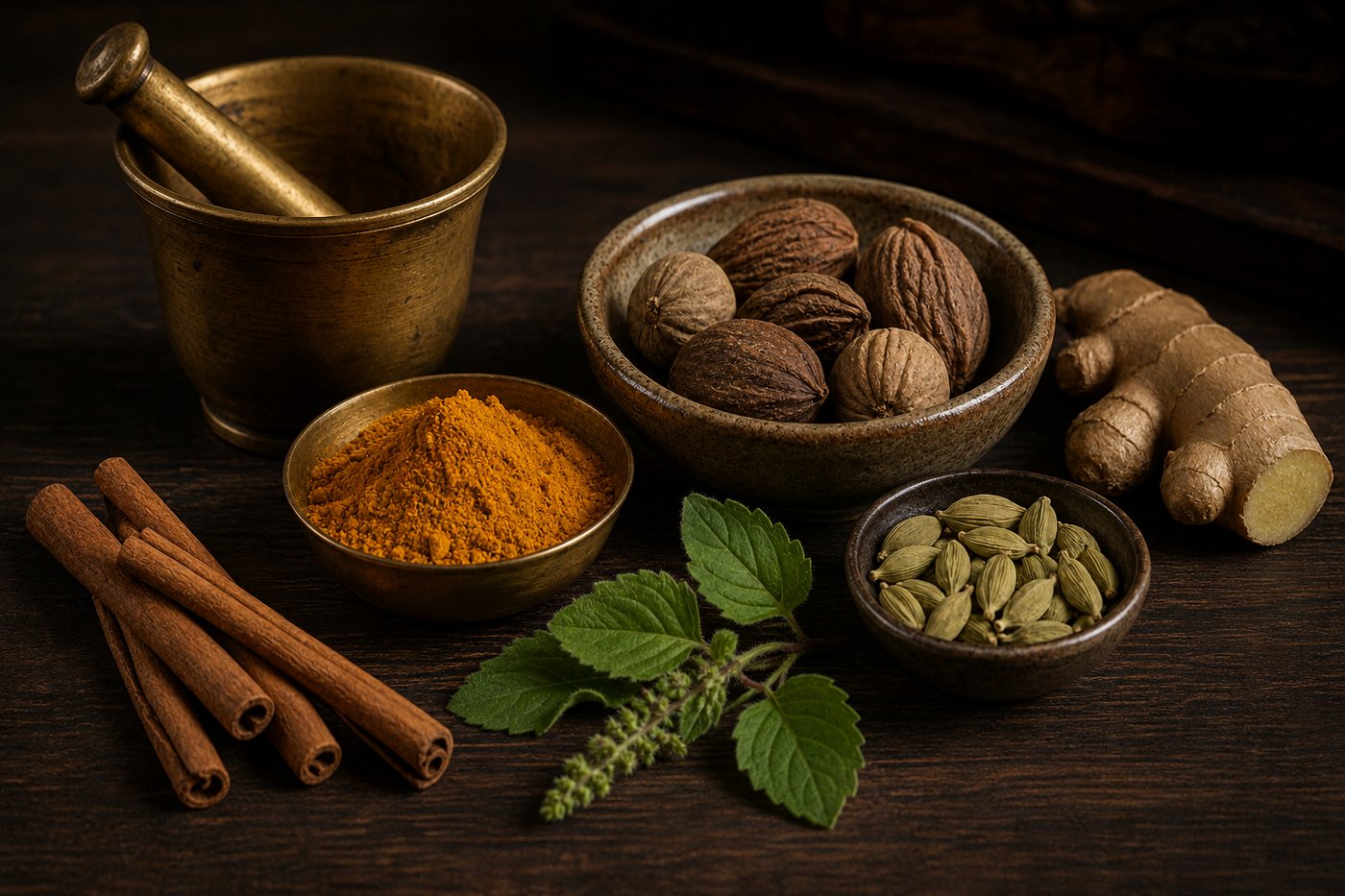
Some pain is a to-do list. Some pain is a message. Before treating yourself from this page, make sure yours isn't the second kind. Pain with fever, unexplained weight loss, or night pain that wakes you from sleep; new numbness, weakness, or loss of bladder or bowel control; pain after real trauma; a hot, swollen, red joint — these need a physician promptly, not a protocol — the link takes you straight to a visit request. And this page deliberately stops at what’s safe without supervision: prescription-strength options for pain, from targeted anti-inflammatories to regenerative injections, sit beyond it and come through a consultation, not a cart.
For everything else — the aching knees, the tight back, the shoulders that took decades of work personally — this page is the plan I actually give patients. Add one thing at a time, give it four to eight weeks, and keep what earns its place. The links support the clinic (dispensary and Amazon both, disclosed plainly at the bottom of the page) — or buy any of it anywhere you like; check third-party testing, match the doses here, and the advice doesn't change.
How to think about it
Pain has drivers.
Treat the drivers
Most chronic body pain isn't one problem — it's several small ones compounding: inflammation that never quite resolves, tissues that are under-nourished and under-lubricated, circulation that isn't clearing what it should, muscles guarding joints that don't feel safe, and a nervous system that has learned to amplify the signal. Attack one driver and you get partial relief. Attack several, patiently, and the trajectory changes.
That's how this page is organized. The herbs quiet inflammation and rebuild tissue from the inside. The light, tools, oil, and heat work circulation and tissue quality from the outside. The movement work at the end is the highest-leverage thing here — if you only act on one section, act on that one. Everything else makes the movement possible and the gains stick.
Everything on this page is what I send home with people. The center of my practice is what happens on the table. Osteopathic manual medicine is the gold standard for body pain — hands-on diagnosis and treatment of the actual mechanism: the restricted joint, the fascial strain, the compensation pattern that has one structure doing three structures' work. Randomized trials support manual osteopathic treatment for low back pain, and the deeper case comes from the treatment room: it's what tends to work when everything else has failed — because when a year of diligent self-care hasn't moved the pain, that almost always means the driver hasn't been found yet. Finding it is the job. Everything below works better once it's found — the herbs, the light, the movement all land on a body that's finally mechanically free to heal.
Osteopathic manual medicine →
What it is, what a treatment feels like, and what it resolves — including the cranial approach for patterns that live above the shoulders.
The internal pharmacy
Herbs that quiet the fire
and rebuild the joint
Ayurveda has treated joint and muscle pain for over two thousand years, and its working framework — calm the inflammation, clear what's accumulated, then nourish and lubricate the tissue — maps surprisingly well onto modern joint physiology. The evidence behind each herb varies, and I'll tell you exactly where each one stands. Traditional use across centuries is real long-term safety information in large populations; it is not the same thing as a randomized trial, and I'll hold both without pretending either is the other.
Doses here assume standardized tablets or powders from a reputable, third-party-tested maker. The professional-grade versions I use are in my online dispensary at patient pricing — each herb below is linked at both the dispensary and Amazon as it comes up.
- Ashwagandha (Withania somnifera) — for joint pain, and for the stress that amplifies it. The best-studied herb on this list: multiple randomized trials support it for stress, sleep, and strength, and smaller trials in joint pain and arthritis show reduced pain and stiffness — consistent with its withanolides damping NF-κB, one of the master switches of inflammation. It also earns its keep indirectly: pain is worse in a body running on cortisol and short sleep, and those are the two things ashwagandha most reliably improves. Dose: 300–600 mg of root extract daily, taken for at least six weeks before judging it. Cautions: skip it in pregnancy; it can nudge thyroid hormone levels, so retest if you're on thyroid medication; it's mildly sedating alongside other sedatives; rare liver reactions have been reported — stop if you develop nausea, dark urine, or jaundice. → dispensary · Amazon
- Triphala — for joint pain, working partly through the gut. Three fruits — amalaki, bibhitaki, haritaki — and Ayurveda's most-used formula. Its compounds are genuinely anti-inflammatory and antioxidant in laboratory and animal work, with early human data in arthritis; the classical logic is that stiff, achy joints often trace back to poor digestion and accumulation (ama), so you clear the system while you treat the joint. Modern trials for pain specifically are thin — I'd call it mechanistically credible with encouraging preliminary data, and its digestive benefits are better established. Dose: 500–1,000 mg before bed. Cautions: it loosens stools by design — start low; skip during pregnancy and with diarrhea; it may modestly lower blood sugar, worth knowing on diabetes medication. → dispensary · Amazon
- Yograj guggulu — for joint pain with muscle tightness. The classical Ayurvedic formula for exactly this presentation: aching joints wrapped in guarded, rigid muscle — what Ayurveda calls vata lodged in the joints. It's a compound of guggul resin (Commiphora mukul) with warming digestive herbs; guggul itself has human anti-inflammatory data in osteoarthritis, while the full formula's evidence is traditional plus small modern studies. Of everything in this section, it's the one my patients with generalized stiffness most often report feeling. Dose: typically 1–2 tablets two to three times daily per label. Cautions: guggul is pharmacologically busy — it can raise thyroid activity, interacts with anticoagulants and antiplatelets, and can reduce absorption of some drugs; skip in pregnancy; buy only from a maker that publishes heavy-metal testing, which matters more for traditional mineral-containing formulas than for single herbs. It's not carried in my dispensary, so Amazon is the practical route. → Amazon
- Dashamoola — the anti-inflammatory base. "Ten roots" — the classical root blend Ayurveda reaches for when inflammation and vata disturbance run together: deep aches, spasm, pain that migrates. Preclinical work supports real anti-inflammatory activity across the constituent roots; human trials of the whole formula are sparse, so this sits in the traditional-plus-mechanism tier. It's gentle, inexpensive, and pairs naturally with yograj guggulu — dashamoola as the quiet background herb, guggulu as the targeted one. Dose: ½–1 teaspoon of powder simmered as tea, or tablets per label, once or twice daily. Cautions: few — it's among the gentler formulas here; skip in pregnancy unless we've spoken. Like yograj, it's not carried in my dispensary — Amazon is the practical route. → Amazon
- Theracurmin — the curcumin that actually absorbs. Turmeric's curcumin is one of the best-studied natural anti-inflammatories, and its problem was never the mechanism — it was absorption: plain turmeric powder mostly passes straight through you. Theracurmin is a nanoparticle preparation that solves this, and it's the form with its own randomized trial in knee osteoarthritis: at 180 mg of curcumin daily, pain scores fell significantly versus placebo and participants leaned less on NSAIDs. That makes it the best-evidenced single joint supplement on this page, and the one I'd add first after the Ayurvedic core. Dose: 180 mg/day of curcumin delivered as Theracurmin — match the studied form and dose on the label; a generic curcumin powder does not reproduce this result. Cautions: interacts with anticoagulants and antiplatelets; skip with bile-duct obstruction or active gallstones; high doses can limit iron absorption, so separate it from iron supplements. → dispensary · Amazon
- Ginger (Zingiber officinale) — the mainstream credential in the group. This one isn't fringe by any measure: the American Academy of Family Physicians includes ginger among its recognized interventions for osteoarthritis, and meta-analyses of randomized trials back that up — modest but real reductions in OA pain and disability, working the same prostaglandin chemistry as NSAIDs without the daily-NSAID toll on stomach and kidneys. It pairs naturally with Theracurmin; the two cover overlapping inflammatory pathways from different angles. Dose: 500–1,000 mg/day of concentrated extract, or 1–2 g of powdered root, with food. Cautions: GI upset at higher doses; mildly increases bleeding tendency — worth knowing on anticoagulants or before surgery. → dispensary · Amazon
- Glucosamine & chondroitin — the one I've stopped recommending. It's the only product on this page without a purchase link, and that's deliberate. The joint evidence was always middling — the large NIH GAIT trial found no significant benefit over placebo overall, with a possible signal only in the moderate-to-severe knee pain subgroup. What changed the math is new: a June 2026 analysis in Nature Metabolism associated glucosamine use with roughly a 25% higher likelihood of progressing from mild cognitive impairment to Alzheimer's disease, with supporting brain-imaging and animal work. That's a retrospective association, not a settled verdict — earlier population studies in cognitively healthy users had pointed, if anything, the other direction — but when a supplement with modest benefit picks up a concrete safety signal pointing at dementia, modest benefit loses the argument. If you have any cognitive concerns or a family history of dementia, stopping it is the conservative move I'd make today; if joint support is the goal, Theracurmin above does that job with better evidence and no such cloud.
If the building-and-nourishing side of Ayurveda interests you — the framework these herbs come from — I've written it up properly: brimhana, the Ayurvedic medicine of building →
Light
Photobiomodulation —
the right wavelength for the right depth
Red and near-infrared light in the right doses genuinely changes tissue behavior — improving mitochondrial energy production through cytochrome c oxidase, modulating inflammation, and increasing local blood flow. This is one of the better-evidenced tools on this page: meta-analyses support photobiomodulation for knee osteoarthritis, tendinopathy, neck pain, and myofascial pain, with the honest caveat that results depend heavily on getting the dose and wavelength right. The single most useful thing to understand is that wavelength determines depth.
- 1060–1070 nm LED — for deep structures. This newer near-infrared window penetrates farther than the classic wavelengths, reaching toward hips, spine, and the deeper layers of large joints. The strongest human data at this wavelength comes from 1064 nm laser trials — including for low back and neck pain — and the clinic's own Nd:YAG laser works exactly there. Home LED panels at 1060–1070 nm deliver the same wavelength at lower power over longer sessions: the trial base for the LED format specifically is still young, so I'd file it as mechanistically strong and clinically promising — a reasonable daily maintenance tool for deep, stubborn structures, with the laser as the focused version when one structure won't yield. Use: 10–20 minutes over the target area, most days, panel a few inches from bare skin. → 1064 nm panels on Amazon
- 600–880 nm LED — for muscles and everything shallow. The classic, best-studied range: red (630–660 nm) for skin and superficial tissue, near-infrared (810–850 nm) for muscle bellies, tendons, and smaller joints like hands, elbows, and knees. This is the range with the deepest evidence base for musculoskeletal pain and post-exercise recovery. Panel quality varies enormously; among consumer panels, Hooga has the best combination of measured output, price, and review history — their standard panels mix 660 and 850 nm, which covers this entire use case. Use: 10–15 minutes per area, 6–12 inches from bare skin, most days. Cautions for both panels: don't stare into the LEDs — near-infrared is invisible, so your blink reflex won't protect you; be careful if you're on photosensitizing medication; don't treat over a known or suspected cancer, over the abdomen in pregnancy, or over the thyroid for prolonged periods; dark tattoos absorb more energy and can heat. → Hooga panels on Amazon
Not ready to buy a panel? Red light is one of the three tools in the clinic's Recovery Lounge membership — a sensible way to find out whether your body responds before anything ships to your house.
Mechanical tools
Pressure and traction —
the targeted hardware
- Massage gun — for pointed treatment. Percussive therapy has modest but real trial support: reduced soreness after exercise and short-term gains in range of motion comparable to hands-on massage. Its honest role is a targeting tool — finding the specific knot in the specific muscle and spending ninety seconds there, rather than vaguely buzzing a whole limb. Guided by reviews, the value pick is clear: the TOLOCO EM26 is Amazon's most-reviewed gun by a wide margin, with 12 mm of amplitude — genuine deep-tissue reach at a fraction of premium pricing. If you want the refined version, the Theragun Prime is the quality buy. Use: 30 seconds to 2 minutes per muscle, keep it moving slowly, muscle only. Cautions: never on bone, joints, or the front or sides of the neck; avoid varicose veins, areas of numbness, and acute injuries; skip it entirely if you're on anticoagulants or have any history of clots without clearance first. → TOLOCO on Amazon · Theragun Prime
- Inversion table — for spinal decompression. Hanging at an angle unloads the spine and briefly increases the space between vertebrae. The evidence is smaller than its reputation: short-term relief of low back pain and sciatica symptoms is reasonably supported — one randomized trial in sciatica patients found fewer went on to surgery — while long-term structural change is not established. I use it as what it is: a few minutes of genuine relief and mobility that make the day's movement work possible. Equipment matters here because your ankles and neck are on the line: Teeter is the only FDA-registered inversion table maker and carries UL safety certification — that's worth the price difference on a device you hang upside down from. The budget alternative with the strongest review history is the Innova ITX9600. Use: start at 20–30° for 1–3 minutes once or twice daily and progress slowly over weeks; you never need full inversion. Cautions — this list is firm: not with uncontrolled high blood pressure, glaucoma or retinal disease, significant heart disease, or pregnancy — inversion raises both blood pressure and eye pressure while you hang. Caution with reflux, hiatal hernia, inner-ear problems, and significant osteoporosis. If you're on blood pressure medication or have any eye history, ask first. → Teeter on Amazon · Innova ITX9600
Lubrication
Feeding the joint fluid
and oiling the machine
A joint is a bearing, and bearings need fluid. Synovial fluid thins with age, inactivity, and chronic inflammation — and Ayurveda built an entire branch of practice, snehana, around restoring internal and external oiliness. Modern medicine arrived at the same intuition from the other direction: viscosupplementation injections put lubricant directly into the knee. What follows is the oral and topical version of that logic — and if it works for you, the full oleation system (the specialty oil pharmacy, the oil-pool treatments, ghee) has its own complete guide →
- Vidari kanda (Pueraria tuberosa) — for synovial fluid. A classical nourishing, building tonic — traditionally the herb for tissues that have run dry, joint fluid included. Preclinical work supports anti-inflammatory activity and effects consistent with its traditional building role; modern human trials haven't been run — the familiar economics of an unpatentable plant, not evidence of failure. I use it as the long-game tissue herb: paired with the external oil work below, over months rather than weeks. Dose: ½–1 teaspoon of powder daily in warm milk or water. Cautions: Pueraria species carry isoflavones with phytoestrogenic potential — discuss first with any hormone-sensitive condition; it's mildly building by design, worth knowing if weight gain is unwelcome. It's not stocked in my dispensary, so Amazon is the practical route. → Amazon
- Castor oil, one teaspoon before bed — internal lubrication, used sparingly. The classical Ayurvedic use of castor oil (eranda) for joint conditions: a small oral dose to lubricate and gently clear, far below the tablespoon-plus doses used as a laxative. Its ricinoleic acid has documented anti-inflammatory activity, and one randomized trial of castor oil capsules in knee osteoarthritis matched an NSAID over four weeks — a single small trial, so file it as promising, not proven. Dose: 1 teaspoon of organic, cold-pressed, hexane-free castor oil at bedtime, in warm water or ginger tea — a few nights per week, not indefinitely. Cautions — read these: never during pregnancy — castor oil stimulates uterine contractions and is a traditional labor-induction agent; skip it with any acute abdominal pain, nausea, vomiting, gallbladder disease, or suspected obstruction; don't use it daily long-term — stimulant laxative dependence and electrolyte loss are real; cramping and loose stools mean your dose found its laxative threshold — back off. → dispensary · Amazon
- Castor oil warm compresses — the external version. A cloth soaked in castor oil over the painful joint, mild heat on top, 20–45 minutes. Evidence is traditional use plus small studies of topical castor oil in arthritis — and a mechanism that makes sense at the skin level, since ricinoleic acid acts on local inflammatory signaling. What I can tell you from practice: patients with achy knees and hands love these, they're nearly risk-free, and they pair beautifully with the abhyanga below. Use: over knees, hands, low back — 3–4 evenings a week. Cautions: castor oil stains everything it touches — dedicate old towels; no broken or infected skin; keep the heat source low enough to hold comfortably; not over the abdomen in pregnancy. → pack kits on Amazon
Circulation & tissue quality
Blood flow, oil, heat,
and vibration
Painful tissue is almost always under-perfused tissue — muscles in spasm squeeze out their own blood supply, and joints that don't move don't circulate their fluid. These four work that problem from different angles, and they stack well because of it.
- BEMER vascular therapy — for arthritis and muscle pain. A pulsed electromagnetic field mat with a specific signal aimed at microcirculation — the small-vessel blood flow that painful, tight tissue lacks. Small human trials in low back pain and fibromyalgia lean positive but are mixed and modest in size, so I'll calibrate it honestly: mechanistically credible, promising human data, not yet settled — and among my arthritis patients, one of the most consistently reported helpers in this section. Sessions are 8 minutes, twice daily, lying on the mat. I've written it up fully on its own page, and it's one of the three tools in the clinic's Recovery Lounge — try it in-clinic before committing to a device, because home units are a genuine investment. Cautions: not with implanted electronic devices like pacemakers without explicit clearance, and I'd hold off during pregnancy or active cancer treatment pending a conversation. → order a BEMER for home
- Abhyanga — daily oil massage, with the right oil for the job. Warm oil worked over the whole body before a shower, 10–15 minutes. Massage itself has respectable evidence for musculoskeletal pain; abhyanga specifically adds the traditional layer — the oil, the warmth, the daily rhythm — with small studies showing reduced stress physiology, and thousands of years of use behind it. The oil choice matters: ashwagandha-bala oil is the strength-and-nerve oil, my default for aching muscles and the depleted, overworked body; vata massage oil is the general daily calming blend, right for dry skin, anxiety, and wandering aches; mahanarayan oil is the classical joint-and-arthritis oil — the one to rub directly into stiff knees, shoulders, and backs before the castor compress or steam. Use: warm the oil, work toward the heart, long strokes on limbs and circles on joints, then a warm shower. The full how-to lives on my daily-routine page. Cautions: oil plus shower tile is a slip hazard — put a towel down; patch-test if you have reactive skin; skip broken skin and acute injuries. The vata and mahanarayan oils are in my dispensary; the ashwagandha-bala oil isn't carried there, so Amazon is the route for that one. → dispensary · ashwagandha-bala oil · vata oil · mahanarayan oil
- Steam tent, every other day. In Ayurveda, oil then steam — snehana then svedana — is the classical pairing: the oil nourishes, the heat drives it in and lets the tissue release. Modern heat-therapy literature supports what every stiff back already knows — heat reduces perceived pain and muscle guarding and increases short-term flexibility. A personal steam tent makes this an at-home habit for well under a hundred dollars: 15–20 minutes, every other day, ideally after abhyanga. Cautions: hydrate before and after; stand up slowly — heat drops blood pressure, and if you're on blood pressure medication or have heart disease, clear it first; skip it in pregnancy, after alcohol, and with conditions that impair sweating; keep sessions modest — this is a therapy, not an endurance event. → steam tents on Amazon — or use the clinic's steam room through the Recovery Lounge
- Whole-body vibration — on a plate that tells the truth under load. Standing on a vibrating platform with soft knees activates muscle reflexively and moves blood and lymph; meta-analyses support whole-body vibration for chronic low back pain, and it's genuinely useful for people not yet ready for vigorous exercise. Here's the part the product listings won't tell you: most budget plates advertise a frequency they only produce empty. Put a human on them and the motor bogs down — the "30 Hz" session you programmed becomes an unmeasured wobble. For therapeutic work you want a machine that holds its true frequency under a full body's load, which means a serious motor: the Hypervibe G10 is the reference pick — a pivotal platform built to deliver its stated frequency and G-force with a person standing on it — and Power Plate is the premium tri-planar alternative with the same engineering honesty. Use: 10 minutes, knees soft, most days. Cautions: not during pregnancy, with a pacemaker, acute clots or DVT history, recent surgery or fresh hardware, or a history of retinal detachment; if you have advanced osteoporosis, ask first. → Hypervibe G10 on Amazon · Power Plate
The foundation
Movement is still
the medicine
Everything above buys you comfort and capacity. Movement is what spends them well — and for chronic musculoskeletal pain, progressive strength work has the strongest evidence of anything on this page. Muscle is the shock absorber your joints were promised: build it and the load on every irritated structure drops.
Getting started with strength training →
Four movements, fifteen minutes twice a week, at any age. What to buy, what to skip — written for the person who has never touched a barbell.
From the Channel
Watch: the principles of safe, effective stretching
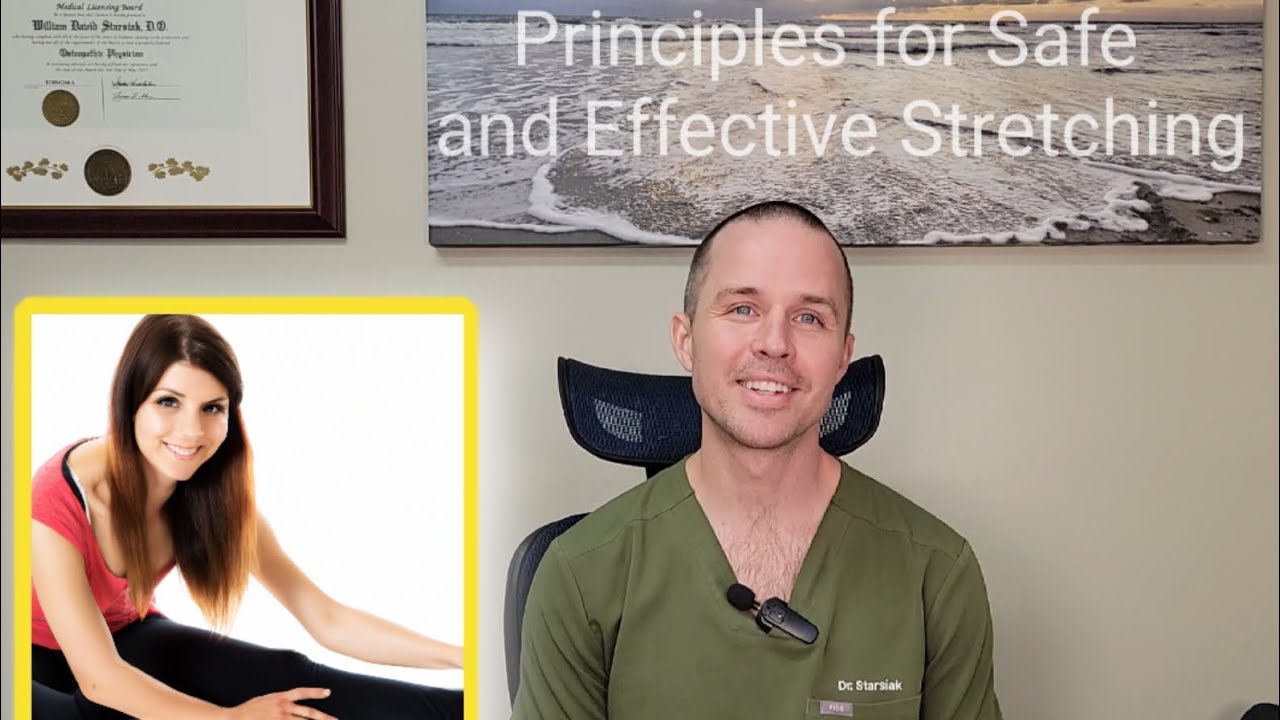
Tight muscle guards painful joints — stretching done right releases the guard without provoking it. These are the principles I teach in the office.
From the Channel
Watch: transcendental relaxation — how to actually relax
Chronic pain lives partly in a nervous system stuck on high alert — the tension you can't stretch out is tension you have to switch off. This is the practice I give patients for exactly that.
Deeper still
Flotation — relaxation
with the gravity turned off
If the relaxation practice above is the skill, a flotation tank is the environment built for practicing it. Ten inches of water saturated with several hundred pounds of Epsom salt, warmed to skin temperature, in the quiet dark: your body floats without effort, and for an hour the two loudest inputs your nervous system manages — gravity and sensation — go nearly silent. Muscles that have guarded a painful joint for years have nothing left to guard against. Most people reach a depth of release in a tank that takes months of practice to find on a mat, which is exactly why the two belong together: the tank shows your nervous system what fully off feels like, and the daily practice teaches you the way back without the water.
The research base — small trials and a structured research program in flotation-REST — consistently shows reduced muscle tension, pain, and anxiety, with some of the better work in fibromyalgia and chronic neck and back pain. Small studies, honestly labeled, but pointing the same direction, and the mechanism is right there on the surface: complete spinal and joint unloading plus profound stimulus reduction. Worth noting for anyone the inversion table's caution list ruled out — the tank decompresses the spine with none of inversion's pressure effects.
- Float centers are the practical route — home tanks run into five figures, while most cities float you for $50–90 a session, less with a membership. Every 1–2 weeks during a painful season is a reasonable rhythm. Bring the relaxation practice from the video above into the tank; that's where it deepens fastest.
- The at-home approximation — a hot bath with two cups of Epsom salt, lights off, door closed, 30 unhurried minutes. It's not a tank, but it borrows the ingredients: warmth, partial unloading, salt water, darkness, and nothing to respond to. → bulk Epsom salt on Amazon
- Cautions: skip floating with open skin, fresh tattoos, or an active ear infection (use the earplugs they hand you regardless); uncontrolled epilepsy needs clearance and a heads-up to staff; claustrophobia is more manageable than people expect — the door isn't locked and can stay cracked open. Choose a center that's transparent about its filtration.
The plan
How to sequence it —
and when to change course
Weeks 1–2: start the movement foundation — the strength program, the stretching principles, the relaxation practice — plus one herb matched to your pattern: ashwagandha if stress and poor sleep amplify your pain, yograj guggulu if stiffness and muscle tightness dominate, triphala if digestion is part of the picture. Add the castor oil compresses or abhyanga in the evenings; they cost little and ask nothing.
Weeks 3–6: layer in one physical tool aimed at your worst area — the massage gun for point-specific muscle pain, red light for a shallow structure or the 1060–1070 nm panel for a deep one, the inversion table if your problem is compressive low back pain, steam every other day if generalized stiffness is the theme, a float session if tension and a wound-up nervous system are doing the driving.
Week 8: audit honestly. Keep what's earning its place, drop what isn't — the goal is a short list that works, not a long one that might. If nothing has moved by eight weeks, the answer isn't a longer list; it's an exam. That's where osteopathic manual medicine comes in — finding and treating the restriction driving the pattern — and for joints that are structurally worn, PRP and regenerative options are the escalation conversation.
Questions I actually get
Asked & answered
Should I start everything on this page at once?
No. Add one intervention at a time and give it four to eight weeks. Start ten things at once and you'll have no idea which one helped, which one caused the stomach upset, and which five you're now paying for out of habit. The exception is the movement foundation, which runs underneath everything from day one.
Is castor oil safe to take by mouth?
In small occasional doses, generally yes for most adults — with firm exceptions. Never in pregnancy: it stimulates uterine contractions and has been used to induce labor for centuries. Skip it with acute abdominal pain, nausea, vomiting, or suspected obstruction, and don't make it a daily long-term habit — dependence and electrolyte loss are real. Cramping means back off.
Is an inversion table safe for me?
Inversion raises blood pressure and eye pressure while you hang. Not with uncontrolled hypertension, glaucoma or retinal disease, significant heart disease, or pregnancy — and caution with reflux, hiatal hernia, and inner-ear trouble. Start shallow, one to three minutes, and progress slowly. When in doubt, ask — it's a thirty-second question at a visit.
Do these herbs replace ibuprofen?
They work on different clocks. NSAIDs act within the hour and are excellent for short-term flares; their cost arrives with daily use — stomach, kidneys, blood pressure. The herbs build over weeks and suit the long game. Many patients bridge: NSAIDs sparingly for bad days while the slower work takes hold. Check anything new against your medication list, especially blood thinners and thyroid medication.
How long until the herbs work?
Weeks, not doses. Most responders notice something by two to six weeks, with fuller effect by eight to twelve. Nothing by eight weeks at a proper dose? Stop it and move on.
What about glucosamine and chondroitin?
I've stopped recommending it — the full reasoning is in the herb section above. Short version: modest evidence for joints at best, and a June 2026 study linked glucosamine to faster progression from mild cognitive impairment to Alzheimer's. Preliminary, but with Theracurmin doing the same job better, there's no reason to accept the question mark.
Is a 1064 nm LED panel the same as your clinic laser?
Same wavelength, different delivery. The Nd:YAG laser concentrates that light at intensities no home panel reaches — minutes per treatment, one structure at a time. The home panel is the daily, gentle version. Reasonable maintenance; not a substitute when one stubborn structure needs focused work.
The ashwagandha, triphala, Theracurmin, ginger, castor oil, and the vata and mahanarayan massage oils I use are in my online dispensary at patient pricing, with dosing attached. Yograj guggulu, dashamoola, the ashwagandha-bala oil, and vidari kanda aren't carried there — Amazon is the practical route for those. Or buy any of it anywhere you like: check third-party testing, match the doses on this page, and you have what you need.
Pain that persists despite honest work deserves hands and a diagnosis, not another purchase. Osteopathic evaluation finds what a page can't — the restriction, the compensation, the joint that's driving its neighbors — and treatment starts the same visit.
Keep reading
The strength program this page keeps pointing to: getting started with strength training →
The framework behind the building herbs: brimhana — the Ayurvedic medicine of building →
Abhyanga and the rest of the daily routine, properly: dinacharya — the Ayurvedic daily routine →
The complete oleation system — oils, ghee, and the oil-pool therapies: snehana — the medicine of oil →
Microcirculation therapy in full: BEMER vascular therapy →
Everything on this page and more, organized: the clinic's apothecary →
This guide is general education, not medical advice, and it does not create a physician-patient relationship. It is not a treatment plan for you specifically. Do not start, stop, or change any prescribed medication based on this page. Herbs and supplements interact with medications — review anything new with your physician or pharmacist first, particularly blood thinners, thyroid medication, and anything for blood pressure or blood sugar. Evidence descriptions reflect published human research where it exists and traditional use where it doesn't; the two are labeled honestly and are not interchangeable. These statements have not been evaluated by the FDA and are not intended to diagnose, treat, cure, or prevent any disease. Disclosure: As an Amazon Associate, Starsiak Osteopathic Clinic earns from qualifying purchases through the Amazon links on this page, and Dr. Starsiak earns from purchases through the Fullscript dispensary and BEMER links — at no extra cost to you. The price you pay is unchanged, and the advice is the same wherever you buy.