Ayurvedic Foundations · बृंहण
Brimhana — the medicine
of building
The framework behind ashwagandha, shatavari, vidari kanda and shilajit. It has a prerequisite almost everyone skips, and for a large number of people it's the wrong direction entirely.
The concept
One of six ways to
move a body
The classical Ayurvedic texts describe six primary therapeutic approaches — six directions you can move a person. They come in pairs, each the counterweight to its opposite: langhana and brimhana, lightening and building. Rukshana and snehana, drying and oiling. Stambhana and swedana, holding and releasing.
Brimhana comes from a root meaning to grow, to make substantial. It's the therapy of nourishment: adding tissue, weight, strength, and substance to someone who has run short of them. Its qualities are heavy, unctuous, stable, dense, smooth, slow — everything langhana isn't.
If that sounds like what a Western clinician means by anabolic, it's close, and the overlap is real. But brimhana is a broader idea than a hormone or a supplement. It's a direction of travel that includes food, oil, rest, sleep, touch, and — last, and least — herbs.
Ayurveda's insight here isn't that building is good. It's that building is a direction, and directions can be wrong. The entire clinical skill is knowing which way a given person needs to move. That's what the rest of this page is about.
Brimhana depends on agni — digestive fire. Your capacity to actually break down, absorb, and assimilate what you take in.
Here's the part that matters: nourishment beyond your capacity to digest it doesn't become tissue. It becomes ama — the residue of incomplete digestion. Heaviness, coating on the tongue, dullness, congestion, that sense of being simultaneously overfed and undernourished.
So if digestion is weak, the correct first move is not to add ghee and building herbs on top of it. It's to restore the fire first — which often means going in the opposite direction for a while. Ayurveda has a specific and slightly counterintuitive answer here: sometimes you have to lighten someone before you can build them.
A Western physician says roughly the same thing in different words. You cannot build muscle out of protein you don't absorb. The supplement is not the input — the digestion is.
Indications
Who brimhana is for
Classically, brimhana is the answer to depletion — karshya, the state of being worn thin. Specifically:
- Recovery from illness, injury, or surgery — the convalescent phase, when the work is rebuilding what was spent.
- Unintended weight loss or muscle wasting, including the sarcopenia that comes with age.
- The frail elderly. This is one of brimhana's clearest and best uses.
- Depletion from overwork, travel, or grief. Ayurveda takes seriously that these deplete tissue and not just mood — and I think it's right about that.
- Chronic Vata-type depletion — dry, light, cold, anxious, irregular, thin, sleepless.
- Training hard enough to be running a deficit — the modern version, and the reason this page is linked from the strength guide.
The common thread: someone who is under-recovered, not someone who is over-fed. Those two states can look similar from the outside and they need opposite treatment.
Contraindications — the important part
Who brimhana is
wrong for
This section is why the page exists. Brimhana herbs are sold as though they're universally good — build, nourish, strengthen, who wouldn't want that. But a therapy with a direction has a wrong direction, and giving brimhana to the wrong person makes them measurably worse.
- Kapha excess — heavy, slow, cool, damp, congested, prone to accumulation.
- Obesity or metabolic syndrome. The building therapy is not what this person needs, and it's the single most common misapplication I see.
- Ama — coated tongue, heaviness after meals, dull appetite, foggy mornings, that sense of things not moving through.
- Weak or sluggish digestion (mandagni). Fix the fire first. Building on top of poor digestion just manufactures more ama.
- Congestion, sinus involvement, or a damp respiratory picture.
- Active infection or acute inflammation. Not the moment to build.
For these people the correct direction is langhana — lightening. Less, not more. Simpler food, more space between meals, movement, warmth, bitter and pungent tastes rather than sweet and heavy ones.
If that's you, don't leave this page feeling told off. It's genuinely good news: you've just learned that the shelf full of building herbs was never going to work for you, and you found out before you spent the money. The productive next steps are strength training, which lightens and builds at the same time and is one of the few things that does both; a structured seasonal cleanse, which is langhana done properly and with supervision; or, if excess weight is the driver, medical weight loss. Get the fire lit and the congestion moving, and brimhana may become right for you later. Sequence matters more than enthusiasm.
This is the whole reason a tradition has categories in the first place. "Nourishing" isn't a virtue. It's a direction, and the question is always which way does this particular person need to go. Getting that backwards is not a small error.
First things first
The herbs are the
smallest part
If you take brimhana seriously as a therapy rather than a shopping category, the herbs sit near the bottom of the list. What actually does the work:
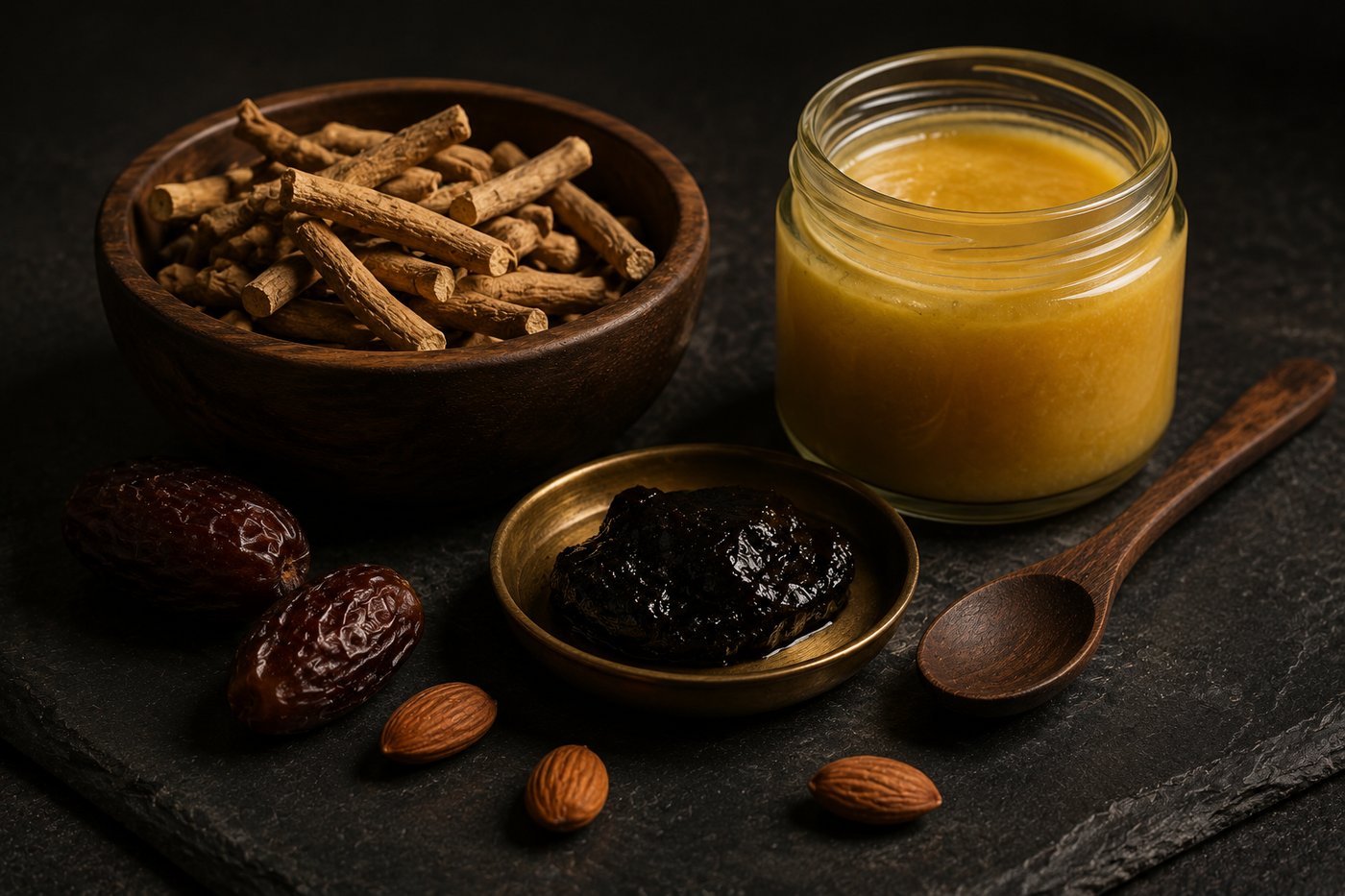
Food. Warm, cooked, moist, and easy to digest. Traditionally milk, ghee, rice, dates, almonds, sesame. Sweet in the Ayurvedic sense — nourishing and building, not sugary. Cooked beats raw here, always: raw food asks more of your digestion, which is exactly the thing you're trying not to overdraw.
Ghee, specifically. The classical brimhana vehicle, and it does double duty — it carries fat-soluble compounds and it's considered to kindle agni rather than smother it, which is unusual for something that heavy.
Sleep and rest. Explicitly brimhana in the texts. Building happens during rest, which is a thing both traditions independently arrived at.
Abhyanga — oil massage. Also explicitly brimhana. Warm sesame oil, done regularly.
Then herbs. Last. They're an accelerant on a fire that has to already be lit.
If you buy every herb below and skip the four things above it, you've bought the garnish and skipped the meal. I'd rather you did the opposite.
The herbs
What each one actually
has behind it
Tiered by how much modern evidence exists, because the tradition and the trial data don't always agree — and where they diverge, you deserve to know that rather than have it smoothed over.
Real modern trial data
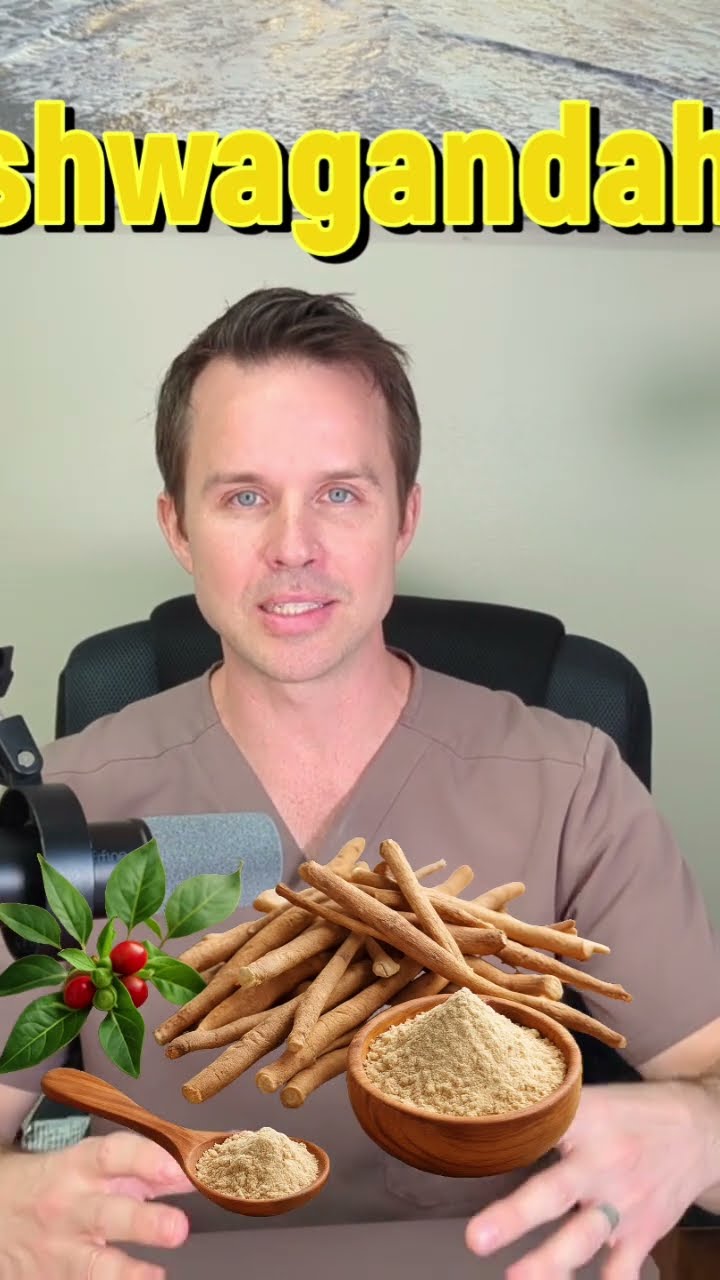
- Ashwagandha (Withania somnifera) — ~600 mg/day standardized extract. The best-evidenced herb in this category by a wide margin: controlled trials showing greater strength and muscle gain alongside resistance training, reduced exercise-induced muscle damage, reliable cortisol reduction, better sleep, and a modest testosterone effect. Classically both brimhana and rasayana. Flags: raises thyroid hormone levels — real caution if you're hyperthyroid or on levothyroxine; rare reports of liver injury; avoid in pregnancy; it's immunostimulating, so discuss it first if you have autoimmune disease; may add to sedatives. → Amazon
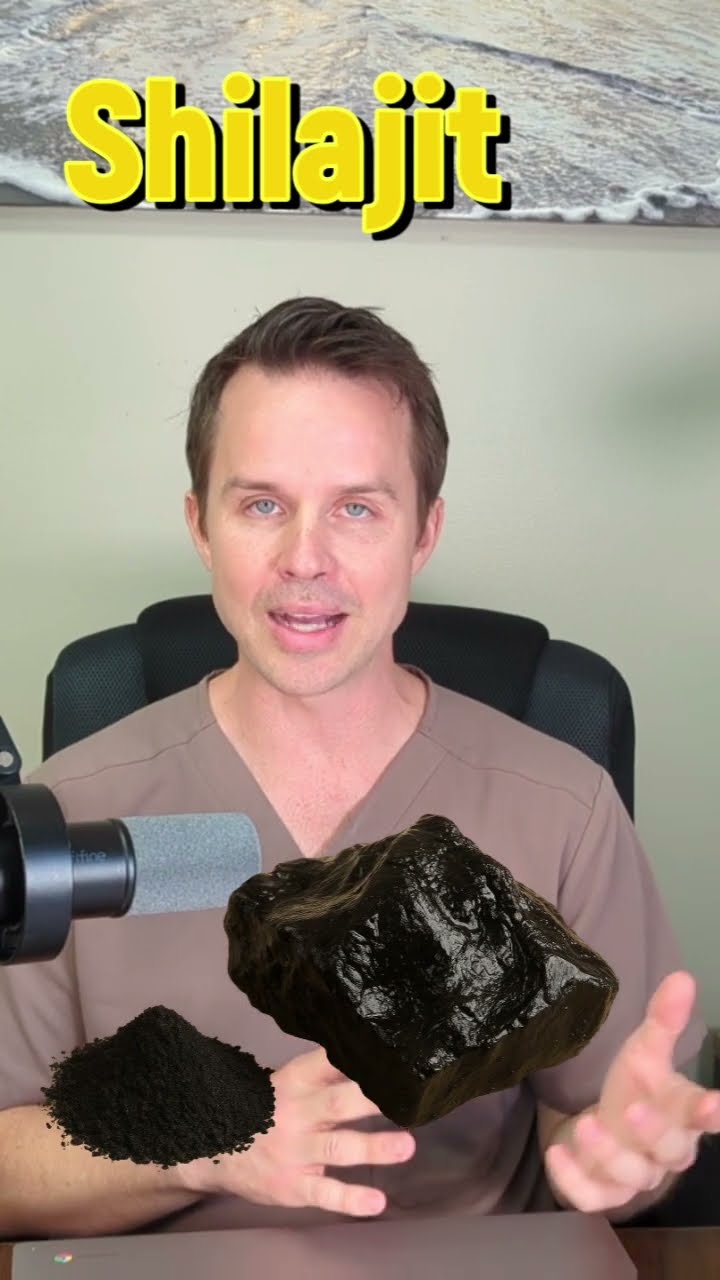
- Shilajit (purified) — ~250–500 mg/day. A controlled trial in men aged 45–55 showed increases in total and free testosterone over 90 days, with a reasonable mitochondrial and fatigue rationale behind it. Classically a yogavahi — a carrier that amplifies whatever it's taken with — which is why it appears alongside brimhana herbs rather than as one. Flags: purity is the entire issue. Unverified shilajit carries a genuine heavy-metal risk. Lab-tested or don't bother. → Amazon
Traditional — long use, thin trial data, low risk
- Vidari kanda (Pueraria tuberosa) — a classical brimhana herb, used as a cooling, nourishing, building tonic. Appears to act on the hypothalamic-pituitary-gonadal axis. Evidence rests on traditional use and preclinical work, not modern trials. Flags: Pueraria species carry isoflavones with phytoestrogenic potential — caution with hormone-sensitive conditions. Not stocked in my dispensary, so Amazon is the practical route. → Amazon
- Shatavari (Asparagus racemosus) — "she who has a hundred husbands," which tells you what it's traditionally for. The principal female brimhana rasayana: a nourishing reproductive and fluid-building tonic, also traditionally used to support lactation. It appears to have selective estrogen-receptor–modulating activity rather than simple estrogenic activity, which is the interesting part and also the caution. Flags: discuss before use with hormone-sensitive conditions — breast, uterine, or ovarian cancer, or endometriosis. It's in the asparagus family, so skip it if you're allergic. → Amazon
- Safed musli (Chlorophytum borivilianum) — a brimhana and vajikarana (reproductive tonic) herb, used much as vidari kanda is. Evidence is largely preclinical. Low risk, low cost — which is the only reason it clears the bar for this tier. → Amazon
Traditional, but with real pharmacology — these are not casual
These three get grouped separately because they're not gentle tonics. They're plants with drug-level activity, and the fact that they're classical doesn't make them mild. I'm including them because you'll encounter them in any serious brimhana list — and because the cautions are the reason to read this page rather than a product label.
- Bala (Sida cordifolia) — the name literally means strength, and it's a classical brimhana herb. It also contains ephedrine and pseudoephedrine. That's not a footnote — it's a stimulant that raises blood pressure and heart rate, it's restricted in some jurisdictions, and it is genuinely contraindicated in hypertension, cardiac disease, anxiety, and alongside MAOIs or other stimulants. If you've read my blood pressure guide, you'll notice I list decongestants as something to remove if your pressure is up. Bala is that same molecule wearing traditional clothing. It has real uses in the right person. That person is not someone with high blood pressure.
- Kapikacchu (Mucuna pruriens) — a classical brimhana and vajikarana herb that contains L-DOPA, the same molecule used as levodopa in Parkinson's disease. This is real pharmacology in a seed. Flags: significant interactions with Parkinson's medication, MAOIs, and antipsychotics; can cause nausea, and at higher doses dyskinesia or psychiatric effects. Not a supplement to freelance with — this one genuinely needs a clinician.
- Yashtimadhu / licorice (Glycyrrhiza glabra) — a brimhana and soothing herb with a long, legitimate history. Its glycyrrhizin raises blood pressure and lowers potassium, sometimes substantially. This is the same licorice I warn about on the blood pressure page, where it hides in teas and candy and never makes it onto a medication list. DGL (deglycyrrhizinated) forms remove the offending compound and are a reasonable alternative when you want the soothing effect without the pressure.
The ashwagandha, shatavari, shilajit and triphala I use in my own protocols are available through my online dispensary at patient pricing — practitioner-only brands with the dosing attached. Vidari kanda, safed musli and pine pollen aren't carried there; Amazon is the practical route for those. Or buy any of it anywhere you like — check third-party testing and check the dose against the studied dose, and you have what you need.
- High blood pressure or cardiac disease? Bala and licorice are out. Both raise blood pressure by real mechanisms.
- Thyroid disease, or on levothyroxine? Ashwagandha affects thyroid hormone levels. Check with someone first.
- Hormone-sensitive condition — breast, uterine, ovarian cancer, or endometriosis? Shatavari and vidari kanda both have phytoestrogenic activity worth discussing.
- Parkinson's disease, on an MAOI, or on an antipsychotic? Kapikacchu contains L-DOPA and interacts directly.
- Pregnant or nursing? Ashwagandha is out. Most of the rest need individual review.
- Autoimmune disease? Ashwagandha is immunostimulating — worth a conversation.
- Weak digestion, coated tongue, heaviness, or carrying excess weight? Then brimhana isn't your starting point at all. Read the contraindications above again.
The bottom line
A direction, not a
virtue
Brimhana is one of the more useful ideas Ayurveda has, and it's routinely flattened into a marketing category — building herbs, nourishing blends, anabolic support — sold to anyone with a credit card, including the many people for whom it's precisely the wrong direction.
The tradition is more careful than its marketing. It asks first whether this person is depleted or congested. It asks whether the digestive fire can handle what you're about to add. And it puts food, rest, oil, and sleep ahead of any herb, because those are what actually build a body.
If you're depleted, recovering, training hard, or getting older and getting thinner — brimhana is likely your direction, and the herbs above are worth knowing. If you're heavy, congested, foggy after meals, and hoping a building herb will give you energy, the tradition would tell you to go the other way first, and so would I.
From the Channel — Shorts
Watch: quick takes on the building herbs

Common Questions
Brimhana — FAQs
What does brimhana actually mean?
From a root meaning to grow or make substantial. It's one of six primary therapeutic approaches in the classical texts — the therapy of nourishing and building, and the direct counterweight to langhana, the therapy of lightening.
Who is it for?
Depletion. Recovery from illness or surgery, unintended weight loss, frailty and sarcopenia with age, exhaustion from overwork or grief, and hard training. The common thread is under-recovered rather than over-fed.
Who should avoid it?
Anyone with excess rather than depletion — Kapha predominance, obesity, congestion, sluggish digestion, or ama. Building on top of poor digestion doesn't make tissue, it makes more ama. That person needs langhana, the opposite direction.
What's agni and why does it matter here?
Digestive fire — your capacity to break down and assimilate. It's the prerequisite for brimhana. Nourishment beyond your capacity to digest becomes ama, not tissue. Fix the fire before you feed it. A Western physician says the same thing differently: you can't build muscle from protein you don't absorb.
Do these herbs have real evidence?
It varies a lot. Ashwagandha has genuine RCT data for strength, cortisol, and sleep. Shilajit has a controlled testosterone trial. Vidari kanda, safed musli, and shatavari rest mostly on traditional use and preclinical work. Centuries of use is real safety information — it just isn't a randomized trial, and I won't pretend the two are the same.
Are they safe?
Most are well tolerated. Several are not casual: bala contains ephedrine and raises blood pressure, kapikacchu contains L-DOPA and interacts with Parkinson's and psychiatric medication, licorice raises blood pressure and drops potassium, and ashwagandha affects thyroid levels. Review any of them against your actual medication list first.
Is pine pollen a brimhana herb?
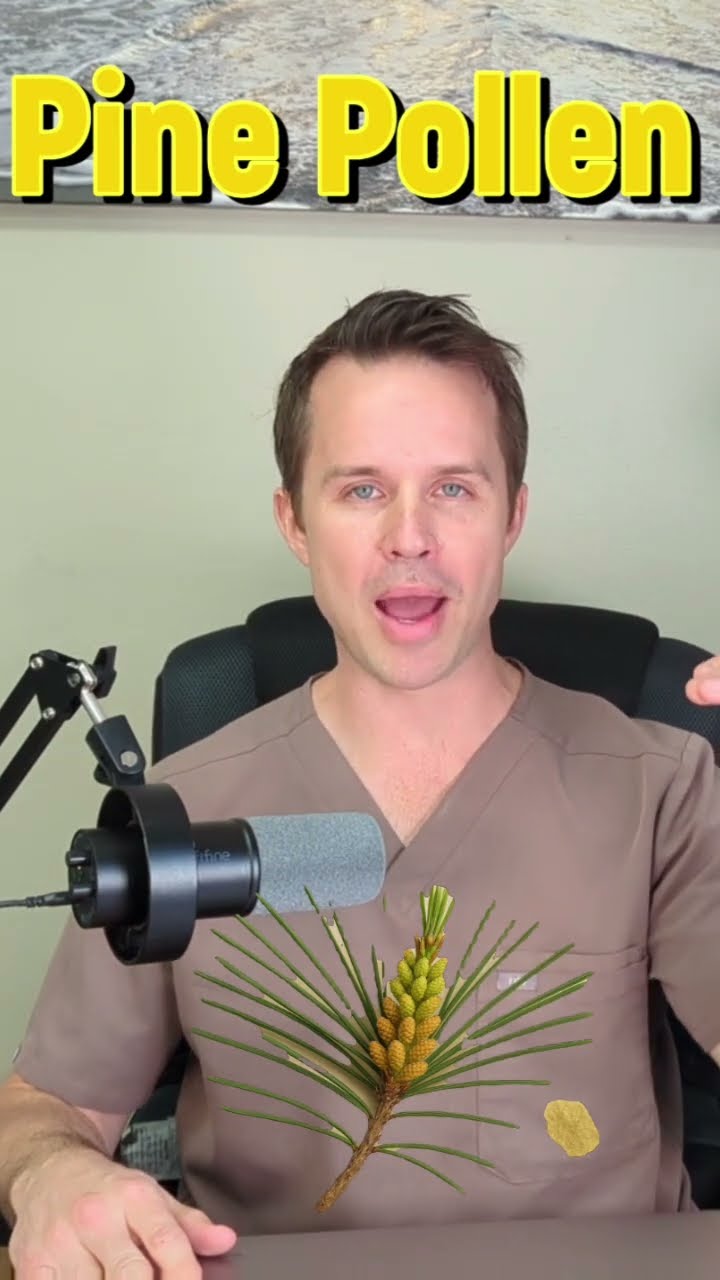
No — it's a traditional Chinese tonic, not an Ayurvedic one, though it's usually sold alongside them. It's nutrient-dense with trace natural androgens, but human trials are essentially absent. It's on my strength training guide in the traditional tier, with the pollen-allergy caution attached.
This is precisely the question a visit answers, and it's not one you can reliably answer about yourself — depletion and congestion can feel remarkably similar from the inside. I'll look at your constitution, your digestion, your history, and your medication list, and tell you which way to go before you spend money going the wrong one.
This page is general education about a traditional medical framework, not medical advice, and it does not create a physician-patient relationship. Ayurvedic categories are a traditional system of assessment and are not a substitute for diagnosis. Several herbs described here have significant pharmacologic activity and interact with prescription medications — review anything new with your physician or pharmacist before starting, and do not start, stop, or change any prescribed medication based on this page. These statements have not been evaluated by the FDA and are not intended to diagnose, treat, cure, or prevent any disease. Disclosure: As an Amazon Associate, Starsiak Osteopathic Clinic earns from qualifying purchases through the Amazon links on this page, and Dr. Starsiak earns from purchases through the Fullscript dispensary — at no extra cost to you. The price you pay is unchanged, and the advice is the same wherever you buy.