Cranial Osteopathy
& Biodynamics
The most profound and subtle form of osteopathic medicine — working with the body's own tidal rhythms to facilitate deep healing with very little force needed. If you've been searching for craniosacral therapy or a pediatric osteopath, this is the physician-performed version of that work — for newborns, children, and adults.
The Cranial Field
Listening to what
the body already knows
Cranial Osteopathy was developed by Dr. William Garner Sutherland DO in the early 20th century. As a student of osteopathy's founder, he proposed that the cranial bones are not entirely fixed — describing a subtle rhythmic motion he connected to cerebrospinal fluid flow and the functioning of the nervous system. A century later this model is practiced worldwide, and its proposed mechanisms remain scientifically debated. Dr. Starsiak is open about that — and untroubled by it, because the case for this work was never a mechanism diagram: it is a century of clinical experience and what parents watch happen in their own babies.
Biodynamic Cranial Osteopathy takes this further — treating the practitioner's hands not as tools of technique but as listening instruments, following the body's own inherent motility and cooperating with the tissue's natural tendency to self-correct. The practitioner does very little. The body does the work.
This approach is particularly powerful for newborns and infants (birth trauma, colic, feeding difficulties, tongue tie), children, adults with headaches, TMJ, trauma histories, chronic stress, nervous system dysregulation, and anyone who has not responded to more forceful treatments. What patients most often report: a sense of deep release, profound calm, and a feeling that something long-held has finally let go.
A recent example: a man arrived with chronic daily headaches — severe, all day, every day. Coming in for his fourth treatment, he counted three mild, part-day headaches across the previous three weeks — that was all. That arc of relief, widening treatment by treatment, is par for the course for this work. Across the practice, the pattern is consistent: about 80% of patients notice a significant change after the first treatment, 90–95% within three — and Dr. Starsiak will tell you plainly if you appear to be in the small group that doesn't respond.
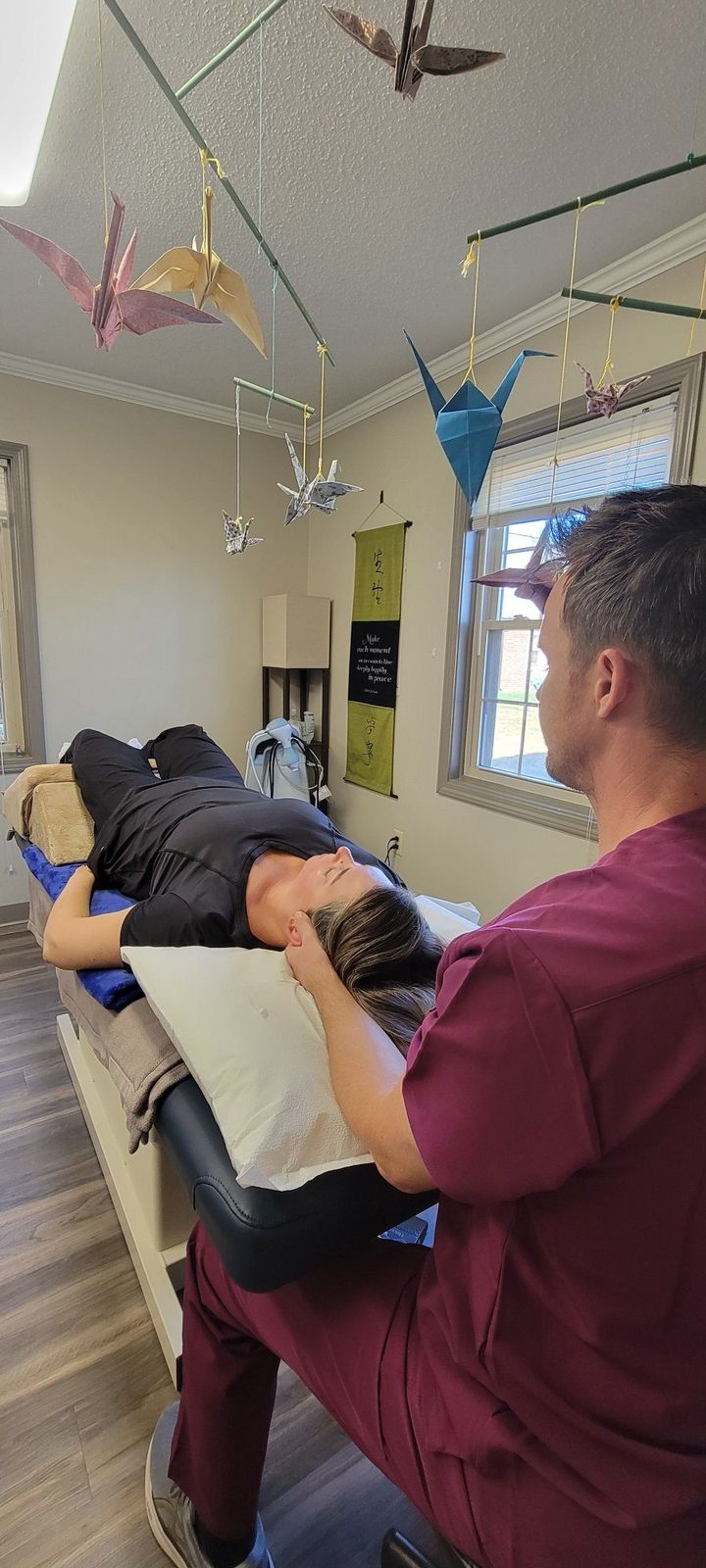
Cranial osteopathy — precise, still, and profoundly gentle
"Beveled like the gills of a fish — indicating articular mobility for a respiratory mechanism." Dr. Sutherland's insight changed everything that came after. This is the tradition Dr. Starsiak practices.
— William Garner Sutherland, DO (1873–1954), carried forward at Starsiak Osteopathic Clinic
From the Channel
Watch Dr. Starsiak on Cranial Osteopathy

Go Deeper
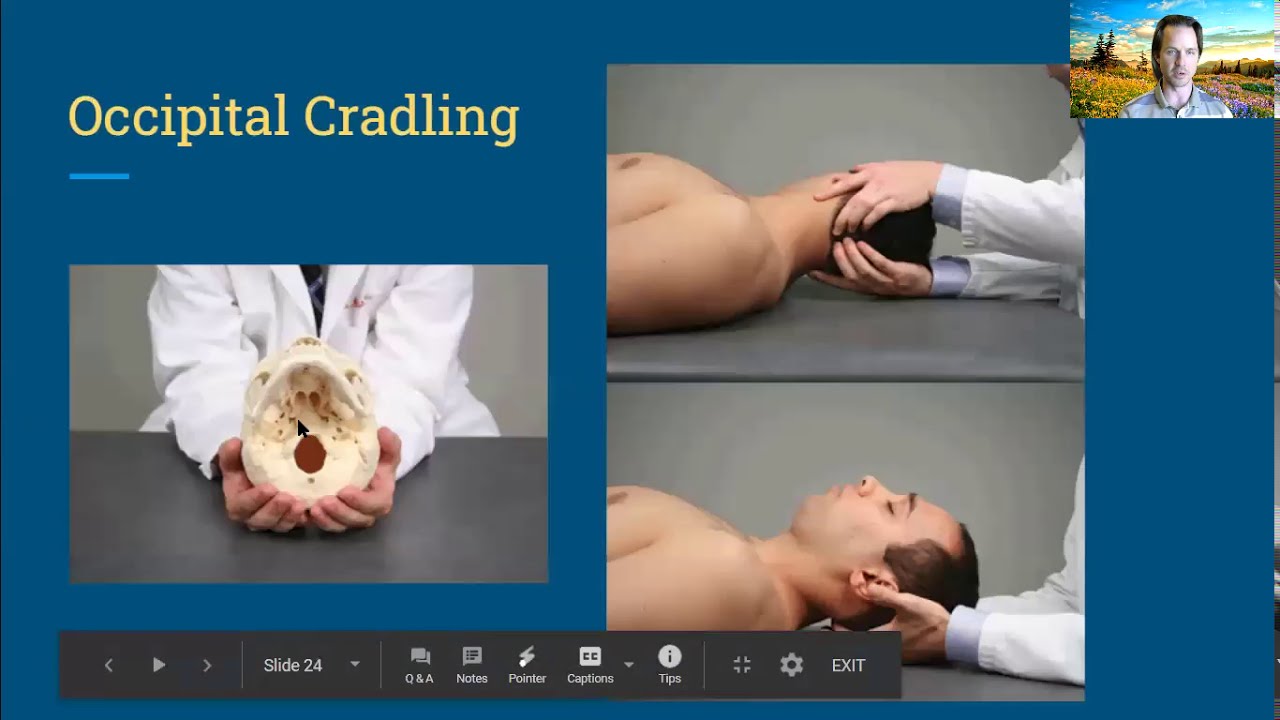
Watch: a brief review of osteopathy in the cranial field
“In one of the early appointments, Dr. Starsiak touched my nose for maybe a few minutes. I hadn’t brought up any current ‘nose’ issues. After several days, I noticed I was waking up with clear sinuses… He explained that he touched my nose because of the deviated septum from a car accident (in 1990!), and it responded quickly.”
“When my son was a few weeks old and experiencing colic, I took him in for OMT. Within 24 hours he was like a new baby! He was relaxed, passing gas more easily and started coo-ing and playing instead of crying during wake windows. I am so grateful.”
Where it stands: In this clinic, the results speak first — the problems that improve under cranial work are so often the ones nothing else had touched. The formal research remains limited and the proposed mechanisms debated; both of those things are true at once, and you'll hear both here. What you won't hear is doubt born of distance: Dr. Starsiak has watched this work, week after week, for over a decade.
Why it's still offered: It is among the gentlest interventions in medicine. For a newborn, or an adult whose system can't tolerate force, the risk–benefit math is very different from a drug or a procedure.
What it doesn't replace: Pediatric medical evaluation, lactation support for feeding difficulties, or proper workup of red-flag symptoms.
Finding Care Nearby
Cranial osteopathy near me — Indianapolis
Starsiak Osteopathic Clinic is at 3955 Eagle Creek Pkwy, Suite A, on the northwest side of Indianapolis — roughly fifteen minutes from Speedway, Avon, Brownsburg, and Zionsville, and a straightforward drive from Carmel, Fishers, Noblesville, and Greenwood.
Two things are worth knowing before you drive anywhere. First, most people searching for cranial osteopathy near them are actually looking for craniosacral therapy, which is the same lineage of work performed by therapists rather than physicians. Here it is done by a DO, which means the cranial exam sits inside a full osteopathic and medical evaluation — if an infant's feeding difficulty is a tongue tie, or an adult's headaches have a red flag behind them, that gets identified rather than treated around.
Second, cranial work is unusually forgiving of a long drive. It uses very light contact, sessions run 45–75 minutes, and most families are not coming weekly — about 80% of patients notice a significant change after the first treatment and 90–95% within three, so the total number of trips is usually small. That math is different from care that requires two visits a week for months.
Newborns through adults. Direct-pay, HSA welcome. If you're not sure this is the right starting point, say so when you request an appointment — the first visit is an evaluation, and Dr. Starsiak will tell you plainly if something else is the higher-leverage next step.
Common Questions
Cranial Osteopathy — FAQs
Is cranial osteopathy safe for newborns?
Yes — it is one of the gentlest forms of treatment in medicine, using very light contact, and is particularly well suited to newborns and infants.
What do parents bring their babies in for?
Common reasons include difficulty nursing, unsettled or fussy behavior, and strain patterns from birth. Many parents report their baby feeding and sleeping more calmly after treatment.
Do adults benefit from cranial osteopathy too?
Absolutely. It is especially helpful for headaches, trauma recovery, and anyone who needs effective care with very little force.
Do you offer pediatric osteopathy?
Yes. Dr. Starsiak treats babies, children, and teens — from newborn cranial work to tongue tie and nursing support. Families come from across the Indianapolis area seeking a pediatric osteopath.
Where can I find cranial osteopathy near me in Indianapolis?
Dr. Starsiak practices cranial osteopathy at Starsiak Osteopathic Clinic on the northwest side of Indianapolis (3955 Eagle Creek Pkwy, Suite A), serving Speedway, Avon, Brownsburg, Zionsville, Carmel, Fishers, Noblesville, and Greenwood. If you've been searching for craniosacral therapy nearby, this is the physician-performed version of that work — for newborns through adults.